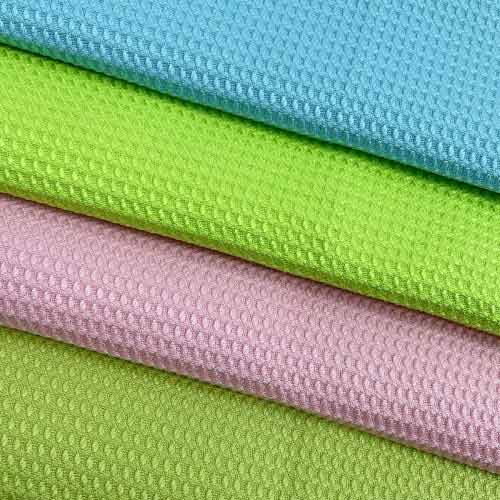
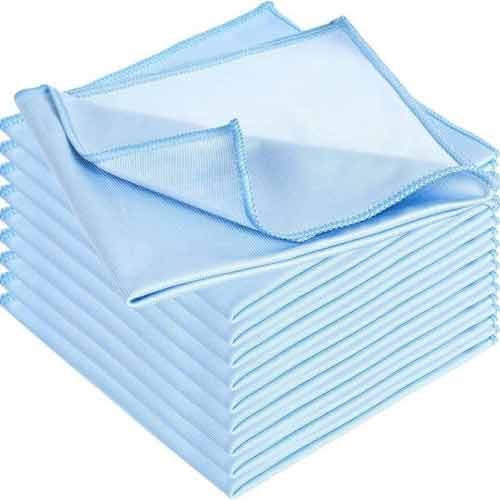
Product details description
Lint-free or low-lint wiping cloths are specialized cleaning textiles
designed to minimize the shedding of fibers, particles, or debris during
use—making them indispensable in environments where contamination control is
paramount. These cloths are commonly employed in semiconductor manufacturing,
pharmaceutical labs, optical assembly, aerospace cleanrooms, and medical device
production, where even microscopic lint can compromise product integrity,
interfere with sensitive instruments, or trigger costly rework. Unlike
conventional cotton or microfiber rags, lint-free cloths undergo rigorous
manufacturing processes to ensure purity and consistency.
The term “lint-free” does not imply absolute zero lint generation; rather,
it indicates that the cloth produces significantly less particulate matter
compared to standard textiles. True lint-free cloths are typically made from
synthetic fibers such as polyester, nylon, or polypropylene, woven or knitted
into dense, non-fraying structures. Some advanced versions incorporate
electrostatically charged fibers to attract and trap dust particles, while
others feature ultrasonic-sealed edges to prevent unraveling. Non-woven
varieties, such as those made via spunlace or meltblown processes, offer
disposable convenience and are often used in single-use critical
applications.
Performance is evaluated through standardized testing methods such as ISO
14644-1 particle counting or SEM (scanning electron microscopy) analysis to
quantify fiber release under simulated usage conditions. Industries may also
impose additional criteria, including chemical compatibility, absorbency rate,
tensile strength, and sterility certification (e.g., gamma irradiation). For
example, in electronics manufacturing, cloths must resist static buildup and be
compatible with solvents like isopropyl alcohol (IPA); in healthcare, they may
require antimicrobial finishes or biodegradability for environmentally conscious
disposal.
Selection depends on application severity, budget, and regulatory
compliance. Reusable lint-free cloths offer long-term cost savings and are
suitable for routine maintenance tasks, while disposable options ensure
sterility and eliminate cross-contamination risks in sterile environments. Users
should always verify material specifications, test results, and supplier
certifications before deployment. As precision manufacturing and
contamination-sensitive processes become more prevalent, lint-free wiping cloths
remain a foundational tool for maintaining quality, reliability, and operational
excellence across high-tech industries.
Previous article:
Why I Switched to Lint-Free Microfiber Cloths
Next article:
Lint-Free Cloth Washing Protocols: Pre-Cleaning Treatments and Maintenance Procedures