Product details description
When selecting lint-free cloths for critical tasks in cleaning, polishing,
or wiping sensitive surfaces (e.g., optics, electronics, lab equipment), the
manufacturing method—woven or knitted—profoundly impacts the cloth's structural
integrity, performance, and suitability. Understanding the fundamental
difference in their construction is key to choosing the right tool for the
job.
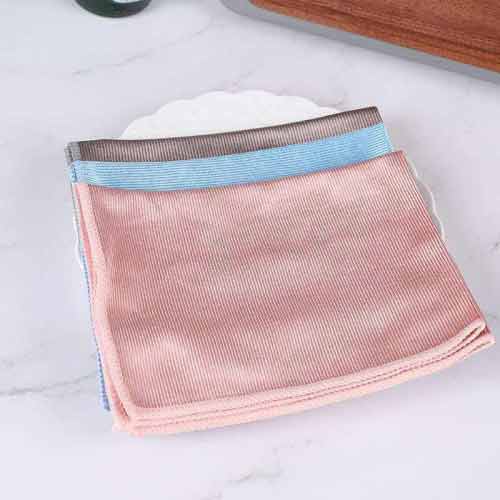
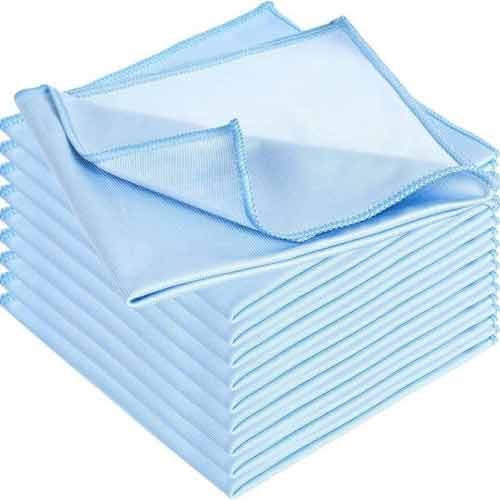
Woven lint-free cloths are created on a loom by interlacing two distinct
sets of yarns (warp and weft) at right angles, much like traditional fabric.
This interlocking structure creates a very stable, flat, and strong cloth with
minimal stretch. The edges are typically heat-sealed or ultrasonically cut to
prevent fraying, resulting in a clean, durable perimeter. The tight, grid-like
weave offers excellent abrasion resistance and dimensional stability, meaning it
holds its shape well under pressure and doesn't easily tear or develop holes.
This makes woven cloths ideal for tasks requiring firm, controlled wiping, light
polishing, or where the cloth might see repeated use.
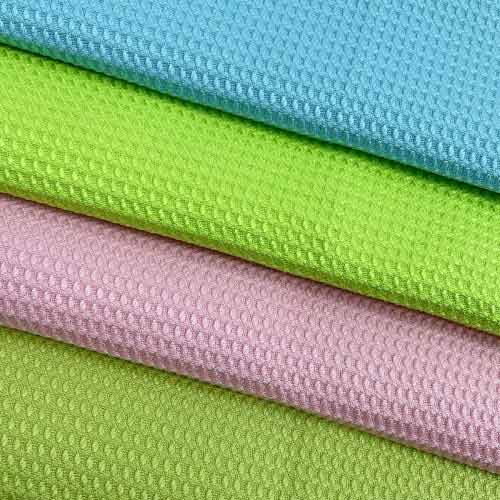
Knitted lint-free cloths are made by interlooping a single continuous yarn
into rows of connected loops, similar to a t-shirt fabric. This structure gives
knitted cloths inherent stretch, flexibility, and a softer, more pliable hand
feel. The looped construction creates more surface area and tiny pockets, which
can enhance absorbency for liquids. However, this same looped structure is less
resistant to snagging; if a loop is caught and pulled, it can unravel or create
a run, compromising the cloth's integrity. Knitted cloths excel in
conformability and gentle wiping, easily wrapping around curved or irregular
surfaces.
The strength and durability comparison favors woven cloths. The
perpendicular interlacing of yarns creates a locked structure that distributes
mechanical stress more evenly. A woven cloth can generally withstand more
aggressive scrubbing and tensile force before failing. A knitted cloth's
strength is more dependent on the integrity of each loop; once a loop is broken,
the damage can propagate. Therefore, for heavy-duty cleaning, wiping sharp
edges, or applications involving solvents that might stress the material, woven
cloths are the more robust choice.
For lint and particle control, both can be excellent if made from
high-quality, continuous filament fibers (like polyester or rayon) that don't
shed. However, the woven construction, with its tighter and more locked-in
fibers, often has a slight edge in generating fewer loose fibers, especially
when new. The choice ultimately hinges on the task: use woven cloths for
precision wiping, polishing, mechanical robustness, and reusable applications.
Use knitted cloths for gentle cleaning of delicate surfaces, conforming to
complex shapes, and tasks where superior softness and absorbency are prioritized
over ultimate strength.
Previous article:
Precision Cleaning with Lint Free Cotton Cloth
Next article:
Industrial Lint-Free Cleaning Cloths: Contamination Control and Particle-Free Surfaces